Many coaches, leaders and HR professionals tell us they’re hesitant to join the ORSC series because they’ve heard it’s “very scenario-based.”
What they often mean is:
“I’m not sure I’ll learn enough if we’re learning through experience instead of instruction.”
This is a fair concern, especially if much of your past training has been theory-heavy, model-driven, or delivered through lectures.
But here’s the surprising truth:
Experiential learning isn’t a limitation.
It’s the reason the ORSC training works.
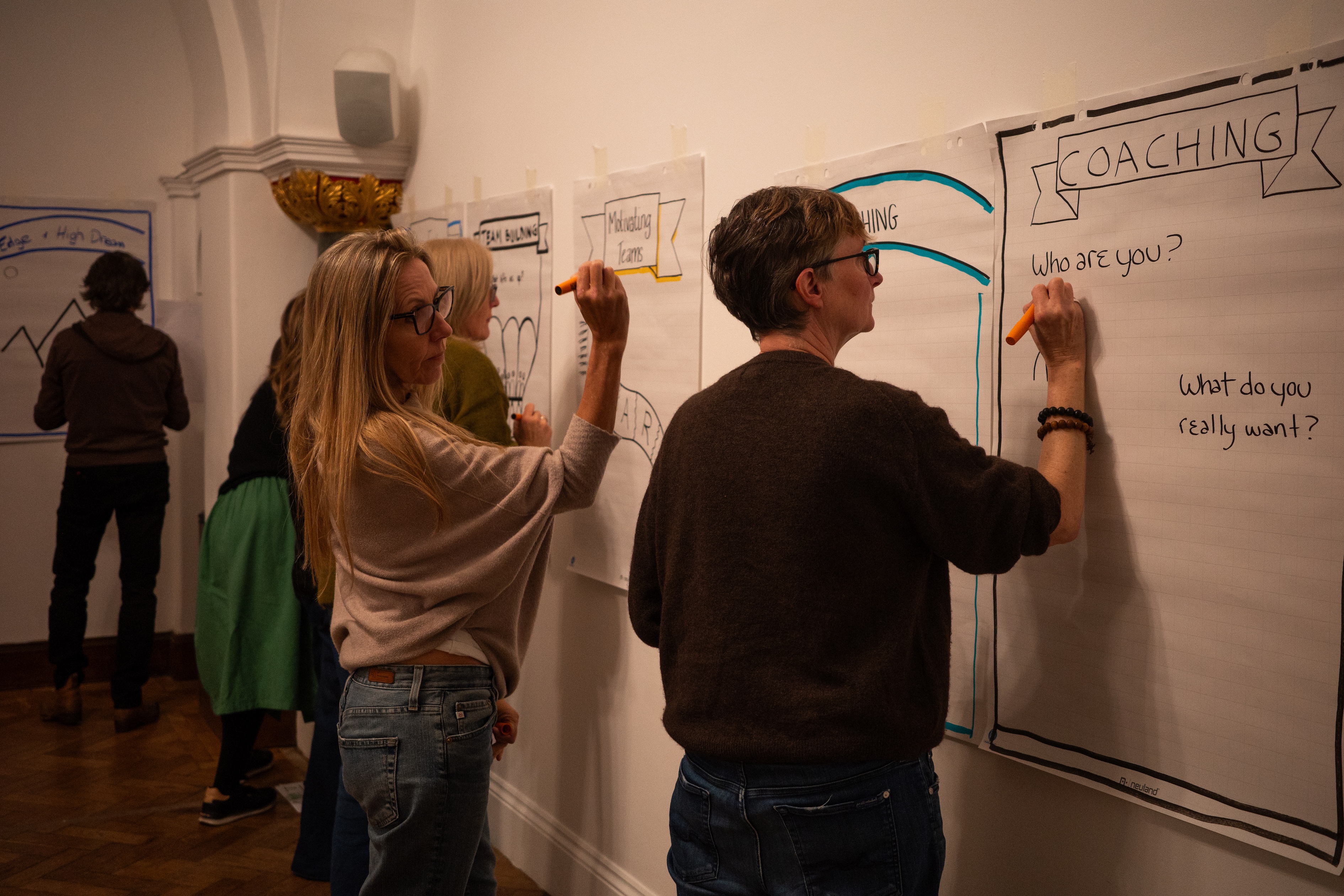
In coaching, leadership, and organisational development, the hardest lessons aren’t learned by thinking. They’re learned by being, relating, sensing, and doing. They’re discovered.
This is why ORSC practitioners consistently say:
- “I finally understood systems when I actually felt them.”
- “I wasn’t told what to do; I experienced it.”
- “The scenarios weren’t artificial. They were us and who we really are… in real time.”
- “The learning in that room stuck with me more than anything I’d ever read.”
Let’s explore why experiential learning is essential for systemic work, and why it leads to more profound mastery than traditional training alone.
Why ORSC Training Is Designed This Way
Relationship Systems Intelligence® isn’t cognitive — it’s relational.
It lives in:
- Emotional fields.
- Communication patterns.
- Group dynamics.
- Roles and identities.
- Conflict energy.
- Unspoken expectations.
- Subtle shifts in connection.
You can’t fully understand these by reading about them.
You have to feel them, notice them, and work with them in real time.
That’s why ORSC doesn’t teach you about systems —
it places you in one.
This is where the learning becomes transformational.
Four Reasons Experiential Learning Is Essential for Systemic Coaching
1. You learn the tools by living them, not memorising them.
You don’t just hear about a Designed Team Alliance
—you create one with your cohort.
You don’t just study Deep Democracy
—you experience what it’s like to hear every voice.
You don’t just learn about emotional fields
—you feel the moment they shift in the room.
This kind of embodied learning sticks.
Long after the course, you can access it again, instinctively, not by flipping through notes.
2. You discover your own edges, strengths, and patterns.
Reading about conflict styles is interesting.
Experiencing your own conflict style in a live system is unforgettable.
ORSC training helps you:
- Notice your triggers.
- Understand how you impact a group.
- Recognise how you manage tension.
- Develop range in how you lead and follow.
- Practice showing up with emotional and relational intelligence.
This experiential self-awareness — and not the textbook — is what makes you a credible systems coach.
3. The system becomes your teacher.
In an ORSC cohort, every moment is a demonstration:
Someone goes quiet → there’s a field shift.
Tension rises → conflict is emerging.
Two voices dominate → a role is stuck.
The group divides → a polarity appears.
Someone steps into leadership → a meta-skill comes alive.
These aren’t “scenarios”.
They’re real, unfolding dynamics.
And your faculty helps you see them. Then teach you how to work with them.
That’s the kind of learning that can’t be simulated.
4. You understand relationships in motion, not theory.
Most leadership and coaching problems aren’t theoretical.
They’re dynamic, emotional and messy.
Experiential learning prepares you for exactly that:
- Teams with competing agendas.
- Organisations experiencing rapid change.
- Families navigating old patterns.
- Partnerships making difficult decisions.
- Leaders with blind spots.
- Groups under pressure.
ORSC teaches you to navigate these situations while you’re in them.
That’s what makes your practice more confident and more grounded.
“Will I get enough real learning?”
You’ll get more than enough… and more than you perhaps expect.
People often worry experiential learning won’t feel structured enough.
But ORSC is both:
- Highly structured in its frameworks, tools and concepts.
- Highly experiential in how those tools come to life.
The combination is what makes it so powerful.
You leave with the theory and the embodied confidence you need to use it.
What Graduates Say:
Here’s what we hear again and again:
- “I came for the tools, which I got, but I left understanding myself.”
- “The scenarios were exactly like my real clients — because they were real.”
- “There’s no way to learn systems work from a book. The training we did just made everything click.”
- “I don’t just know ORSC. I can do ORSC.”
That’s the gift of experiential learning. Turning knowledge into capability.
This Isn’t Scenario-Based Learning.
It’s System-Based Learning.
The scenarios you experience in ORSC aren’t hypothetical.
They’re the actual dynamics of your cohort: real emotions, real conflict, real connection, and real complexity.
And because you’re supported by expert, relational faculty, every moment becomes a learning:
- “What just happened?”
- “How did we get here?”
- “What shifted the field?”
- “What role is emerging?”
- “How can this system evolve?”
You’re not acting out situations.
You’re working with the actual relationship system that exists “in the room”, with the people you’re training with. Precisely the same way you will with clients.
Why This Matters for Coaches, Leaders and Organisations
The world needs practitioners who can:
- Hold complexity.
- Navigate conflict.
- Build alignment.
- Sense emotional fields.
- Work with group dynamics.
- Listen systemically.
- Lead relationally.
These aren’t intellectual skills. They’re experiential ones.
And ORSC gives you the practice, the repetition, the awareness, and the confidence to use them anywhere:
- Team coaching.
- Leadership development.
- Agile environments.
- HR and people operations.
- Change management.
- Mediation.
- Family and partnership coaching.
This is learning you take into every relationship you’re part of.
In a World of Complexity, Experiential Learning Isn’t Optional. It’s Essential.
If coaching is the craft of working with people, and systems coaching is the craft of working with relationships, then you need more than just theory.
You need to know how it feels, how it moves, and how it emerges.
That’s why ORSC training is designed the way it is.
Not because scenarios are fun.
But because they’re the only way to build true systemic capability.
Curious to experience this for yourself?
The 2026 ORSC training schedule is now live, including January’s Fundamentals and Winter Series.
If you’re ready to move beyond intellectual understanding and develop real relational mastery, this is your invitation.