
CRR UKCRR UK
Book A Course
Linkedin YouTube Facebook Instagram
  • Home
  • Courses
    • The ORSC Series
      • Module 1 Fundamentals of ORSC
      • Module 2 Intelligence
      • Module 3 Geography
      • Module 4 Path
      • Module 5 Systems Integration
    • ORSC Fast Track Programme
    • Team Coaching Supervision for the Systems Coach
    • Alchemy
    • Book a Course
  • Systems Consultancy
  • Community
  • Resources
    • Blog
    • Team Coaching Tools
    • Conflict Management
    • FAQS
    • Podcasts
  • About
    • What is ORSC?
    • Why Train With Us
    • Who We Are
  • Contact
    • Join our Mailing List
Menu
CRR UK
  • Home
  • Courses
    • The ORSC Series
      • Module 1 Fundamentals of ORSC
      • Module 2 Intelligence
      • Module 3 Geography
      • Module 4 Path
      • Module 5 Systems Integration
    • ORSC Fast Track Programme
    • Team Coaching Supervision for the Systems Coach
    • Alchemy
    • Book a Course
  • Systems Consultancy
  • Community
  • Resources
    • Blog
    • Team Coaching Tools
    • Conflict Management
    • FAQS
    • Podcasts
  • About
    • What is ORSC?
    • Why Train With Us
    • Who We Are
  • Contact
    • Join our Mailing List
CRR UKCRR UK

ORSC UK Community Reading List – September Edition

14th September 2021 /Posted bykchilton

This month’s reading list recommendations come from our wonderful participants who completed the ORSC Series in June, 2021. As usual, these are a collection of wide ranging books, and great reads, that are relevant for both experienced ORSC practitioners and coaches, and those who are new to ORSC.

Leadership and Self-Deception
by The Arbinger Institute
Recommended by Maggie Maples
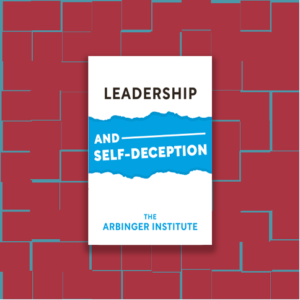
Leadership and Self-Deception explains how self-deception derails personal relationships and keeps organizations and leaders from achieving the results they want.

Instead of focusing on producing results, many leaders are trapped “in the box” of distorted thinking—they blame others to justify their own failures and can’t see how they themselves are a problem. The book is told in a story like format, of a manager and how he realizes what he is doing and the impact. This book had such a huge impact on me and I really believe if people haven’t read it yet, it’s an amazing read and well worth it.


Motherhood Manifesto
by Elaine Glaser
Recommended by Rachel Rowland
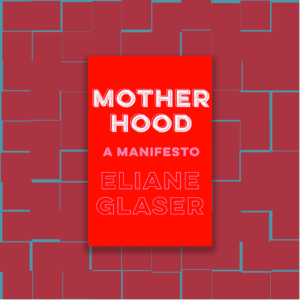
Glaser talks about the high dream / low dream of motherhood and uses the book to reveal the difference between the individual experience and institution (systemic) patterns of motherhood. I think she is showing the impact of systemic thinking, without using any of those ORSC terms of course! I think it relates to ORSC because the author is pointing at the need for a myth change (myth changes are explored on ORSC Path)

It is not going to be to everyone’s taste, but it’s certainly a fresh and cutting perspective for those who need it.

Glaser normalises the mixed (and often conflicting) emotions in parenting, and describes the role fatigue induced by the system, the gap between the ideal and reality of motherhood and the toxic impact of blame, assigned by a system.


Thinking Fast and Slow
by Daniel Kahneman
Recommended by Yulia Pieskova
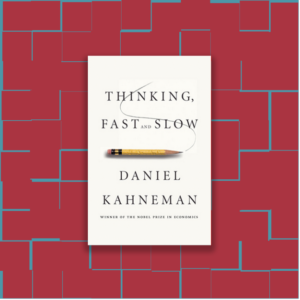
The author describes how our mind works in terms of how our personal bias and intuition informs our decision making. Kahneman, who won a Nobel Prize in psychology, introduces the main concept of System 1 and System 2. System 1 is how we react by default, calculated quickly by our past experiences, which may not be rational, and System 2 comes into play when we use awareness to judge situations.

This concept helps us to understand how background influences bias and helps us to work towards gaining awareness, as a coach, and as part of a system.

Antifragile Things that Gain Disorder
by Nassim Nicholas Taleb
Recommended by Yulia Pieskova

This book is an approach to the learning curve; how to learn in an efficient way. Taleb uses the metaphor of bamboo shoots growing when he talks about resilience. When bamboo grows, if it faces moderate wind as its growing, it will be more flexible and be able to weather stronger winds in the future. However, if the wind is too strong when it grows, it will break. He talks about finding this balance between seeking challenges that make us stronger, searching for that moderately strong wind, and avoiding things that will break the spirit.

This book is useful for the ORSC coaching approach because it will help you meet your client where they are, enabling you to be able to pull them up just enough, but not too much that you lose that connection by pushing them too hard. It will also help you with difficult clients, knowing when something is too “edgy” for you as a coach (ORSC term describing something as uncomfortable and out of your comfort zone.)




Share Post
  • Twitter
  • Facebook
  • Mail to friend
  • Linkedin

Related posts

Read more

Psychological Safety Isn’t “Nice to Have” — It’s the Capacity to Stay Connected Under Pressure (and ORSC Helps You Build It)

5th March 2026
There’s been a strong thread in conversations across LinkedIn recently about psychological safety — what it actually means, where teams get it wrong, and why... Continue reading
Practical Tools, Immediate Impact: Why ORSC Fundamentals Is the Course Every Team Leader and Coach Needs
Read more

When Presence Matters: Why In-Person Learning Still Changes Everything

26th February 2026
Virtual learning works — and we know this first-hand. Over the past few years, we’ve adapted quickly and intentionally at CRR UK. We’ve invested in... Continue reading
Why ORSC Is Becoming Essential for Agile
Read more

Tiny Teams, Big Dynamics: Why ORSC Is Becoming Essential for Agile at Human Scale

15th February 2026
Tiny Teams promise speed, clarity, and ownership. And in many cases, they deliver — up to a point. What many agilists are now discovering is... Continue reading
tiny teams
Read more

Tiny Teams: Why Smaller Is Becoming Smarter in Agile Organisations

8th February 2026
Across the Agile community, a quiet but significant shift is underway. After years of scaling frameworks, expanding structures, and optimising coordination across ever-larger systems, many... Continue reading
Energy, Opportunity and Forward Momentum
Read more

2026: The Year of the Horse

29th January 2026
Energy, Opportunity and Forward Momentum 2026 in the Chinese Zodiac is the Year of the Horse — and not just any Horse year, but specifically... Continue reading

Comments are closed

CRR UK

Join us on social for the latest news and insights

Twitter Instagram Linkedin

Call Support. 0333 242 0893 | Email Support. info@crruk.com

PRIVACY POLICY | T&Cs | TEACHING FACULTY

Linkedin

© Copyright CRR UK 2025. Website design by Creative Essence.

We use cookies to remember your preferences, track website traffic, and personalise your experience. By continuing to browse, you consent to our use of cookies. If you'd rather opt out, please do so via the button below.