
We’re living through a once-in-a-generation transformation. The rules of leadership, teamwork, and work itself are being rewritten in real time. As AI reshapes entire industries, as hybrid working continues to test traditional models, and as generational and cultural complexity rises in our organisations — we are facing not just change, but complexity.
The truth is: the old playbook no longer works.
In this pivotal moment, the most important shift we can make is not just in what we do — but in how we see. We need to stop treating performance, culture, and retention issues as individual failings. These are not isolated problems. They are signals from the system — invitations to evolve the way we relate, collaborate, and lead.
This is where systems coaching becomes essential.
What Is Systems Coaching?
Systems coaching is the practice of coaching the relationship itself — not just the individuals within it. Based on the principles of Organisation and Relationship Systems Coaching (ORSC™), systems coaching helps teams, partnerships, and organisations:
- Surface the invisible patterns that shape group behaviour
- Work through conflict with emotional honesty and trust
- Strengthen shared purpose, resilience, and creativity
- Tap into the collective intelligence of the team or system
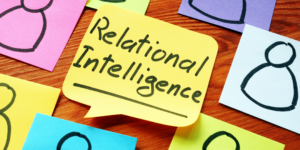
This methodology is grounded in Relationship Systems Intelligence (RSI™) — the capacity to sense and respond to the system as an entity with its own voice, needs, and wisdom. RSI teaches us to listen not just to the people, but to the field they create together.
Why Is Systems Coaching Needed Now?
We’re not facing simple problems anymore. Today’s challenges are messy, fast-moving, and deeply relational. Here’s why systems coaching is the response this moment demands:
1. AI and Technological Disruption
Automation and AI are transforming industries. But even as machines grow more capable, human skills — empathy, trust, connection — grow more vital. Systems coaching helps people reclaim humanity at work, anchoring innovation in strong, resilient relationships.
2. Redefining the Future of Work
Hybrid and flexible work is here to stay, and it’s testing how we connect, collaborate, and lead. Without intention, teams drift. Systems coaching brings clarity, alignment, and cohesion across distance and time zones.
3. Generational and Cultural Complexity
Today’s workplace is multigenerational, multicultural, and multifaceted. Coaching the system helps us surface and work with diverse voices and perspectives, not flatten them. It’s about equity, inclusion, and belonging at a systemic level.
4. Constant Change and Adaptation
In an era where uncertainty is constant, the ability to adapt is critical. Systems coaching strengthens a team’s change resilience by building shared ownership of decisions, fostering psychological safety, and helping people process and integrate change together.
The Problem With Top-Down Fixing
Too often, organisational leaders still approach problems by fixing individuals:
- “Let’s coach the underperformer.”
- “Let’s run a workshop to ‘motivate’ the team.”
- “Let’s bring them back into the office so we can ‘see’ productivity.”
But these quick fixes don’t address the relational field — the trust, clarity, and shared purpose that make teams thrive. They don’t ask the most important question:
What is this system trying to tell us?
When leaders view their team as a living system, everything changes. Conflict becomes feedback. Silence becomes data. Friction becomes an invitation to evolve.
Systems Coaching in Action
Let’s break this down into practical examples:
| Challenge | Traditional Response | Systems Coaching Response |
| Team conflict | Coach individuals separately | Surface the emotional field and patterns as a group |
| Poor engagement | Introduce perks or incentives | Explore shared vision, roles, and unmet needs |
| Change resistance | Push harder with messaging | Work with the emotional reality of the system and its resistance |
| Low innovation | Run an idea hackathon | Address underlying dynamics like fear, hierarchy, or mistrust |
This isn’t about being ‘soft’. Systems coaching enables teams to get to the heart of the matter faster — and solve it together.
The Paradigm Shift: From Fixing to Evolving
The key shift is this:
“The system isn’t broken. It’s trying to evolve.”
Systems coaching isn’t about correcting dysfunction. It’s about helping relationships grow into their next stage of maturity.
It’s about:
- Moving from leader-as-fixer to leader-as-co-creator
- Trading control for conscious design
- Listening to the collective instead of just the loudest voice
This is the essence of Relationship Systems Intelligence (RSI™). It’s not just a skillset — it’s a way of seeing and being with others.
ORSC: The Proven Path to Systems Coaching
For over 20 years, the ORSC series has been the global gold standard in systems coaching. It is the only ICF-accredited training pathway focused entirely on coaching relationships and systems.
Participants learn:
- Groundbreaking tools and models for team dynamics
- How to navigate conflict, roles, power, and emotional fields
- The inner work and meta-skills needed to hold the whole system
From team leads and agile coaches to HR professionals and executive coaches, ORSC helps leaders and practitioners transform the way people relate, collaborate, and lead.
The Future Is Co-Created
The biggest myth in leadership is that one person must have all the answers.
In truth, the wisest answers emerge from the system itself — when we slow down, listen deeply, and create the conditions for insight to emerge.
Systems coaching isn’t just another professional development trend. It’s a new lens. A new language. A new way of creating the future — together.
If you’re ready to lead with complexity, compassion, and courage, this is your invitation.