
At the beginning of 2026, LinkedIn released its annual Jobs on the Rise list — a snapshot of the fastest-growing careers in the UK labour market.
The findings are revealing. Technical roles linked to artificial intelligence and machine learning dominate the growth charts, alongside strategic advisory positions, entrepreneurial roles, and jobs that blend professional expertise with real-world problem solving.
This data makes one point unmistakably clear:
The future of work will demand not just technical competence — but the ability to navigate complexity, ambiguity and human systems.
Here’s why.
1. Technical Growth Doesn’t Mean Less Human Work — It Means Smarter Human Work
Not surprisingly, roles such as AI Engineer, Head of AI, and Machine Learning Researcher are among the fastest-growing. These are roles at the intersection of technology and decision-making — not just code execution.
But even in these highly technical fields, success increasingly depends on:
- Communicating complex ideas clearly
- Collaborating across organisational boundaries
- Understanding impact on teams and systems
- Interpreting data in context
For example, many of these roles require skills beyond pure programming, such as pattern recognition, problem-solving, judgement and collaboration — competencies that sit squarely within what many call relational or human-centric skills.
This blending of technical and human capability reflects a broader labour market shift: AI amplifies the need for high-level human skills rather than replacing them.
2. Strategic and Advisory Roles Are Growing — Because Context Matters
LinkedIn’s list also highlights rising demand for roles like Strategic Advisor — positions that require not just business know-how, but a systemic view of organisations and markets.
Being able to:
- See the bigger picture
- Facilitate alignment among diverse stakeholders
- Navigate uncertainty
- Guide organisations toward wise decisions
…are deeply relational skills. They can’t be automated. They’re not learned in isolation. And they’re exactly the kinds of capabilities that systems-oriented approaches help build.
In a world where data and AI can generate options, humans are increasingly needed to interpret, contextualise and convene, to hold complexity without collapsing into simpler narratives.
3. Emerging Roles Show That Human Skills Are Not Optional — They’re Strategic
The report includes diverse roles such as:
- Employment Consultant — advising and placing people into roles
- Sales Manager — guiding teams through complex client relationships
- Founder & Entrepreneur — leading and co-creating new ventures
These roles require mastery of relational dynamics, influence without authority, and the ability to orchestrate human systems as much as technical systems.
LinkedIn’s own “Jobs on the Rise” list reinforces broader industry research showing that soft skills like communication, adaptability, and teamwork are among the most sought after by employers.
In other words:
Technical skills may get someone hired — but relational skills are what let someone thrive and lead.
4. Work Is Increasingly Hybrid, Distributed and Systemic
Even within technical roles, flexibility and adaptability are becoming core job attributes, with many fastest-growing roles offering hybrid options.
This mirrors a broader shift in how work gets done:
- Teams are distributed
- Projects depend on cross-functional collaboration
- Information flows through networks, not hierarchies
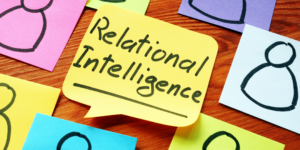
In these contexts, relational intelligence becomes essential.
It’s not enough to know your own job.
You need to understand:
- How your role connects to others
- How to influence without formal authority
- How to manage tensions between goals and relationships
- And how to lead through complexity beyond predictability
These are exactly the skills that traditional education and technical training don’t emphasise — but organisations increasingly value.
5. What This Means for Career Growth — and for Organisations
LinkedIn’s data reminds us that:
- Technical growth doesn’t replace the need for human judgement
- AI and automation elevate the premium on skills that machines don’t have — like empathy, collaboration, creativity and systemic awareness
- Strategic, adaptive and relational roles are becoming foundational across sectors
This is echoed in broader labour market research showing that employers are shifting toward skill-based hiring — valuing demonstrable capabilities over formal credentials alone.
In this landscape:
- Career advancement depends on relational effectiveness
- Organisational success depends on systems thinking and collaboration
- Individual impact depends on being able to navigate human complexity as fluently as technical complexity
How This Connects to Systems-Oriented Development
This shift in job demand aligns closely with what practitioners of Organisation and Relationship Systems Coaching (ORSC) have understood for decades:
Work happens through systems of relationships — and success is shaped by the quality of those relationships.
AI, automation and digital acceleration make human relational skills even more strategic, not less:
- They complement, rather than compete with technology
- They enable teams to make better use of technical outputs
- They ensure organisations remain adaptive, resilient and humane
Systems awareness helps individuals and teams:
- Read and respond to signals beneath the surface
- Navigate conflict and alignment effectively
- Build psychological safety
- Hold complexity without oversimplifying
These capabilities are not “nice to have.”
They are central to thriving careers and successful organisations in 2026 and beyond.
The Future of Work Isn’t Just Technical
LinkedIn’s Jobs on the Rise highlights where opportunity is growing — but it also reveals what’s required to make the most of that opportunity.
Technical jobs may open doors, but relational and systemic skills determine whether someone:
- Thrives in role
- Leads people and projects at scale
- Bridges organisational divides
- Shapes the future of work itself
In a world where AI transforms tasks and tools, the human work of connection, interpretation, collaboration and systems sense-making becomes the greatest leverage of all.
Join us for the Spring Series