
Checking in with Habits and Rituals
Habits and rituals are the unsung heroes of a positive mindset. They provide structure, consistency, and purpose, helping to anchor us in times of uncertainty and stress.
Habits are the automatic behaviours we perform daily. They can be as simple as brushing your teeth or as complex as a workout routine. Positive habits, like meditation or journaling, can significantly impact our mental well-being. They help to establish routines, reduce decision fatigue, and promote overall efficiency.
Rituals, on the other hand, are intentional actions imbued with meaning. They can be anything from a morning coffee ritual to a weekly family dinner. Rituals provide a sense of purpose, connection, and grounding. They can help to reduce anxiety and create a feeling of calm and centeredness.
By incorporating positive habits and meaningful rituals into our lives, we can cultivate a more optimistic outlook. These practices help to:
- Reduce stress: Routine and consistency can lower cortisol levels, the hormone associated with stress.
- Boost self-esteem: Consistent positive actions can enhance self-worth and confidence.
- Increase focus and productivity: Regular habits and rituals can improve concentration and time management.
- Strengthen relationships: Shared rituals can deepen connections with loved ones.
- Foster gratitude: Incorporating practices like journaling or meditation can cultivate a sense of appreciation for life’s blessings.
In essence, habits and rituals are the building blocks of a positive mindset. They provide a foundation for personal growth, resilience, and overall well-being. By consciously cultivating positive habits and meaningful rituals, we can create a life filled with purpose, joy, and fulfilment.
We use rituals throughout the ORSC curriculum to create consistency and embed learning. One of the ORSC rituals is the use of check-in/out questions.
Habits and Rituals – Check in Questions
Check-ins and check-out rituals are simple ways for a team to open or close a meeting, symbolically and in a collaborative way to identify a team’s “emotional field”.
Checking-in/out invites each member in a group to be present, seen, and heard. Checking-in emphasises presence, focus, and group commitment; checking-out emphasises reflection and closure.
Knowing where every member of a team stands on an emotional level before and after the work provides clarity and increases transparency, trust, and empathy. The use of a ritual builds team identity and cohesion. The metaphor of weather is often used for each team member to share their weather system at the beginning and conclusion of a meeting.
Use of the ritual builds team alliance and cohesion. Choosing not to do check-in/check-out is a ritual.
These questions can be anything! Some examples CRR UK have used in the past:
- What’s your favourite colour?
- How do you feel about spring?
- Who’s your hero and why?
- How do you feel after the bank holiday?
- Describe how you’re feeling by using the weather as a metaphor
Check in Questions at CRR UK
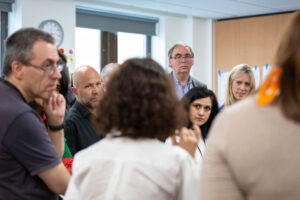
During our CRR UK weekly updates meetings we always start with a check in question. A couple of weeks ago we experienced the impact of check-in questions during a team meeting.
Each week a member of the team chooses a check in question. Keith chose “how are you with maps?” after being asked for directions on a dog walk earlier that morning. As people pondered on their answers and started to share, our system started to reveal things that hadn’t been discussed before.
One member of the team shared they have dyspraxia, so navigation can be tricky and using maps (even electronic ones) still seems to result in wrong turns. From there we discovered that two other team members have dyslexia and a meaningful conversation on how we see and work differently took place.
From using a simple check in question, that was seemingly completely unrelated, we discovered we were a neurodivergent team with a variety of different strengths and perspectives.
Rituals to Improve Relationships
Our team ritual of using check-in questions allowed us to develop a deeper understanding of each other and how we work as a team and has changed the way we approach tasks and challenges.
Group rituals, such as our monthly community events help to improve social bonding and create an atmosphere of trust. Coming together as a group of like-minded people who share similar values creates connection and a safe space to practice, share and reflect in a safe space.