How Relationship Systems Intelligence Changes the Story
A friend recently shared a story that may sound familiar to anyone working in a fast-moving team or evolving organisation:
“I work as an account manager in a digital marketing agency. It’s a small hybrid team and we’ve just gone through a restructure. Our team used to be led by an Account Director with a group of Account Managers and Executives of varying experience. But now, the team has shifted—all of us are senior level, and we’re working more independently without a need for direct oversight from an Account Director. While it’s a logical evolution, it created real tension. The Account Director felt their role had been diminished, that their authority was under threat. And the rest of us felt like we were being unfairly blamed for the change.”
This is a classic organisational pain point. On paper, it’s about restructuring roles. In reality, it’s about identity, belonging, status, power, and trust—all of which live in the relational field.
This is where ORSC (Organisation and Relationship Systems Coaching) comes in.
The Invisible Forces at Play
Without ORSC-trained leaders or team members, a situation like this might spiral into:
- Unspoken resentment building beneath the surface
- Passive-aggressive communication or outright conflict
- Power struggles masked as performance feedback
- Decision-making paralysis as people retreat into silos
- A fractured team culture built on mistrust rather than collaboration
What’s missing? The ability to see the systemic dynamics at play. Without training in Relationship Systems Intelligence (RSI), it’s easy to individualise the problem:
“She’s threatened by us.”
“They’re being ungrateful.”
“Leadership handled this badly.”
In contrast, ORSC-trained practitioners are equipped to ask:
🌀 What’s trying to happen in the system?
🌀 What identity loss is occurring, and how can we honour it?
🌀 What needs are going unmet?
🌀 What conversations aren’t we having?
How This Could Look With ORSC
Imagine this team had one or more people trained in ORSC. What might have been different?
✅ A relationship systems coach could help the team name the Third Entity—the collective identity of the team—and recognise it was evolving. This allows the group to respond with curiosity rather than fear.
✅ The Account Director’s experience of loss could be acknowledged with empathy. ORSC frameworks like “Lands Work” or “Deep Democracy” could surface the different emotional truths within the team without polarising sides.
✅ Instead of competition for status, the team could shift into co-creation of new roles, exploring how each person’s unique wisdom and leadership still matters—even as structures change.
✅ Most powerfully, the team could move from re-acting to re-relating. Using tools like “Designed Team Alliances,” the team could rebuild trust, set new agreements, and orient toward a shared vision of success.
This Isn’t About ‘Fixing People’—It’s About Changing the Way We Work
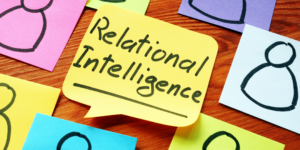
What this story illustrates is not a failure of strategy. It’s a relational breakdown—and those require relational intelligence to repair.
Training in ORSC doesn’t mean you’ll avoid every challenge. But it does mean your team will:
🔹 Recognise conflict as a signal, not a threat
🔹 Stay connected even in uncertainty
🔹 Honour all voices, especially the ones in pain
🔹 Build psychological safety with intention
🔹 Recover faster from ruptures
In today’s ever-changing work environments, empathy alone isn’t enough. We need tools, frameworks, and mindsets that allow us to lead relationally—especially in moments of transition.
What Kind of Team Do You Want to Be Part Of?
If you’re a leader, coach, HR or OD professional—or someone who wants to bring more conscious, systemic intelligence into your organisation—ORSC training can be the game-changer.
Whether you’re just beginning or ready to continue your journey, we invite you to take the next step:
🔹 Introductory Module (Virtual or In-Person in Autumn 2025)
🔹 ORSC Series (for deeper integration and application)
🔹 Spread the word to someone who could benefit
📅 Explore our upcoming courses
Let’s build systems where change doesn’t tear us apart—it brings us closer together.